Ventry Solutions, Inc. logo

HOME | PRODUCTS | CONTACT | ABOUT | NEWS/EVENTS | SITEMAP

Fans Catalog Dealers Downloads Resources
Advantages Electric Fans Propane Fans Specs Options Facts / FAQs Gallery Prices

All-Terrain VENTRY Fans - Home

FAN FAQ TOPICS:

Best seller
Fan ID - serial numbers
Carbon Monoxide / CO Levels

Electric fans and GFCI
Exhaust extensions

Honda GC versus GX motors
Negative pressure ventilation (versus PPV)
Fan lifespan and durability
Fan stability and walking
Safety Light option
Noise levels

Propeller composition and blades
Wood versus metal propellers
Wheels - Pneumatic, Solid
Fan placement
Horsepower and size
Confined space ventilation
Shrouds
Troubleshooting
Thrust You are here
Warning

How is thrust a measure of fan performance (in addition to CFM)?

Because there are so many ways to measure and so many factors that affect a fan's CFM rating, we recommend the use of thrust to compare fan performance instead of just CFM. Thrust is a great measure of air volume because there are far fewer variables and anyone can measure it consistently between multiple fans!

Thanks to that handy law of physics (Newton’s 3rd Law of Motion) that for every action there is an equal and opposite reaction, it follows that the more air a fan pushes, the harder the fan will also be pushed backwards. Fans must be engineered in such a way as to handle that thrust without walking, rotating, or falling over!

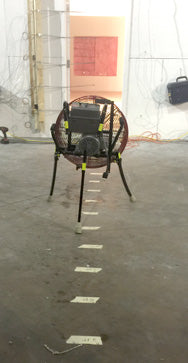
Below is a flyer describing our thrustometer or thrust-measurement apparatus. A simplified version can be done by setting a fan on top of a piece of plywood and the plywood on top of a couple of pipes or broomsticks (rollers). Attach a fish scale to the front of the guard and to something solid in front of the fan so as the fan pushes backwards, it pulls on the scale.

Positive Pressure Ventilation Fans Thrust Measuring Device  

Note: To approximate the volume of air being pushed, multiply pounds of thrust by a little over a thousand cubic feet/pound.

As a rule of thumb, you should have 11-15 pounds of thrust for residential fires, 15-18 pounds for commercial fires, and 18+ for industrial fires.

Click to download thrust measurement flyer
Click image above to download
a flyer on measuring thrust (PDF)

TRUE STORY

Dad and James needed to move a couple docks across Hauser Lake, about a mile. They first used a small boat supplemented by our shop fan, a propane powered 24GX200 VENTRY. At the end of the journey, they had to maneuver the docks down a long, narrow canal to the beach, so they just let the fan do it all. It worked remarkably well!

In these photos (click them for larger view) you can see the wake of the docks moving through the water. Using the LP VENTRY Fan was equivalent to standing in the water and pushing against the docks with 20 pounds of force. Thrust is a great thing, as long as your fan is designed to handle it, as VENTRY Fans are.

By the way, would we do this with a fan that might walk?! Of course not! VENTRY Fans stay put.

Using thrust to push docks

Using thrust to move docks


Ventry Solutions, Inc. - Click for contact info
Copyright 2010 Ventry Solutions, Inc. All Rights Reserved