Existing customers, please register for your FREE upgrades! |
Balloon Inflation - Benefits of VENTRY® Inflation Fans

Photo used with the permission of Jeff Haliczer. Click image for more photos.
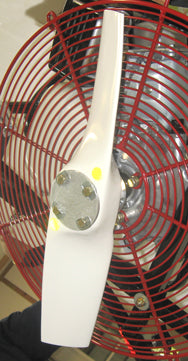
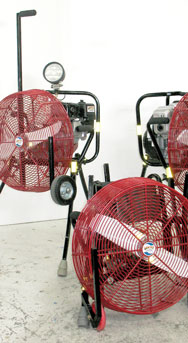
Every feature engineered into VENTRY Fans works to the benefit of Hot Air Balloonists. The anhedral curve of our Safety Propeller produces a narrow, uniform air cone. This allows for placement far back, out of the way of the crew and lines, and produces a very tight cold pack. The propeller pushes impressive CFM to fill the envelope fast, and with extendable legs, dirt and sand are not projected into the envelope or at the crew.
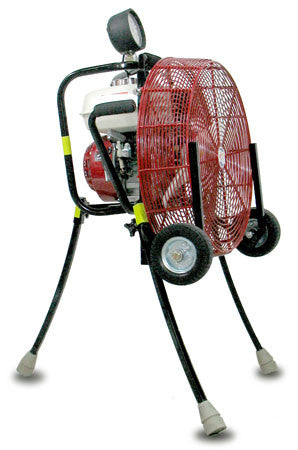
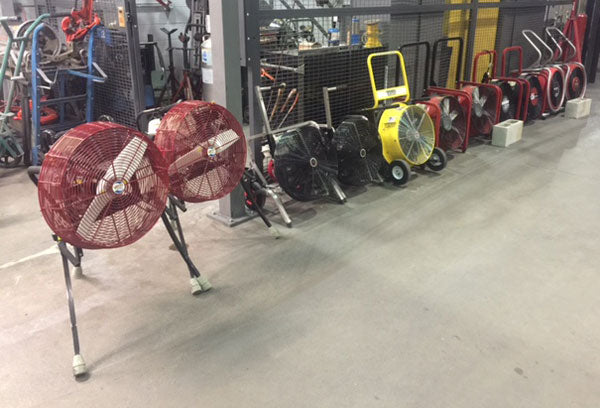
VENTRY Inflation Fans are easy to move, store, and use, and lighter than many other fans (see a comparison). Balloonists often carry their VENTRY Fan in the basket of their balloon, as the legs retract for compact storage.
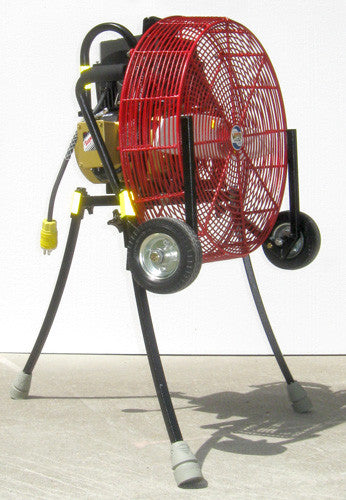
Extendable legs allow for more air flow to the prop, keeping the prop from trying to suck air out of the ground, and because they retract, can make the difference between getting it into your vehicle or not!
There are many advantages engineered into our VENTRY Fans that are best experienced hands-on. |
|
|
What do Balloonists Like About VENTRY Fans?
We are repeatedly told that VENTRY Fans hold their own against--and often exceed the air output of--much higher horsepower blowers. The added bonus is that VENTRY Fans retract to fit in the balloon basket. See the dimensions table for fan sizes.
The patented, three-legged design of VENTRY Balloon Inflation Fans offer the advantages of an elevated fan with the convenience of compact storage. Our unique aircraft-style propeller with forward-sweeping tips creates a uniform, tight air cone allowing the fan to be set farther back from the throat of the balloon. This keeps the fan out of the way of lines yet pushes the air into the balloon, not onto the crew.
Top of page
|
|
Other Advantages of VENTRY Inflation Fans for Hot Air Balloonists
- Compact size; fits in most balloon baskets
- Maximum air volume, quiet operation, and one-person setup
- Simple design for easy, intuitive operation and field service (parts available through your local hardware store or via next-day air shipping)
- Kevlar™ and fiberglass-clad, aircraft-type Safety Propeller is engineered for superior safety, efficiency, and durability
- Safety propellers utilize aircraft technology to push maximum air with minimal horsepower
- High pressure will inflate your balloon even when it is squeezed between others and resists billowing due to wind
- Extending the legs and elevating the fan minimize the amount of debris blown which can cause damage and even ignite during hot inflation
- Lightweight for easy handling by ground crew members
- Extremely stable; will not tip or walk
- Handle on operator side for convenient moving and aiming. Also features dual seven-handles for one-person carry when legs are extended or retracted
- Extremely tight cold pack due to propeller design
- Heavy-duty guard designed to take abuse
- Rugged, powder-coated steel frame
- Legs lock in any position allowing downward aiming and compact storage
- Elevating the fan increases propeller clearance, eliminates debris pick-up, ejection, and damage, and enhances safety
- Three Wheel options to choose from for easy transport and maneuverability
- Standard, familiar engines and simple, intuitive operation
- Three differentially-extendible, screw-lock legs stand securely on uneven ground and minimize “walking”
- Minimal noise level due to propeller’s efficient utilization of engine thrust
- Tripod design retracts compactly for storage in the basket
- Patented outwardly curving legs provide a larger footprint for increased stability as fan is elevated. Stable operation throughout full range.
- Five-year warranty on all materials and workmanship (We increased this from three years in 2008. Warranty is retroactive!)
- Shipped fully assembled via UPS, FOB Hauser, ID
Top of page
|
|
Inflator Fan Placement for Hot Air Balloon Inflation
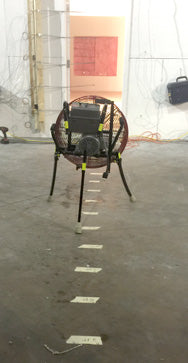
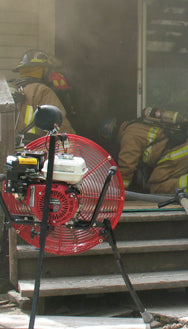
We have found that a VENTRY Fan should be placed approximately 1.5 times the diameter of the throat opening back from the throat. (In firefighting, we recommend 1.5 times the height of the door.) This gives maximum volume while keeping the fan clear of lines. Placing a VENTRY Fan too close to the throat opening will decrease inflation efficiency more so than setting it too far away. We encourage balloonists to experiment with placing our fans waaaaay farther back from the throat than they think they should!
See also the detailed FAQ about fan placement.
|
|
|
|